Table of Contents
Introduction
In the world of industrial ceramics, few materials are as indispensable as Alumina (Al₂O₃). Known for its unmatched hardness, thermal stability, and corrosion resistance, Alumina continues to be one of the most widely used high-performance ceramic materials across global industries. Its versatility makes it a material of choice for everything from aerospace and semiconductor manufacturing to energy and medical applications.
At CeramForge, Alumina-based components are crafted through a precision-engineered production process, backed by rigorous quality monitoring. This ensures that every component exhibits structural integrity, reliability, and superior performance in extreme operating conditions. Our expertise lies in offering fine-tuned material grades with distinct property characteristics—engineered to meet the exact needs of every industrial sector.
Alumina in Industrial Ceramics
Alumina, also known as aluminum oxide, forms the foundation of many advanced industrial ceramics. Available in varying levels of purity, it can be optimized for specific applications through careful control of its microstructure and grain size.
We produce both coarse-grained and fine-grained Alumina variants are produced. Coarse-grained Alumina offers superior wear and impact resistance, ideal for abrasive industrial environments. Fine-grained Alumina, on the other hand, delivers exceptional dimensional precision—preferred for applications demanding tight tolerances and high surface quality.
Advantages of Alumina in Industrial Applications
- Versatility: Suitable for mechanical, electrical, and chemical environments.
- Durability: Outlasts metals and polymers under extreme conditions.
- Adaptability: Available in multiple compositions to suit performance needs.
- Cost-Effectiveness: Provides long-term operational savings through extended life cycles.
By balancing these advantages, We ensures that the use of Alumina aligns with every industry’s operational and economic goals.
Key Properties of Alumina
The properties of Alumina ceramics make it one of the most technically reliable materials available today. It delivers a rare combination of mechanical strength, thermal endurance, and corrosion resistance—all while maintaining low weight and high precision.
Mechanical Properties
- Outstanding Hardness: Alumina ranks among the hardest known materials, second only to diamond among oxides, making it highly resistant to wear and abrasion.
- High Strength and Rigidity: With exceptional compressive strength, Alumina can bear substantial mechanical loads without deformation.
- Dimensional Stability: It maintains its geometry under stress and over long operational cycles.
- Low Density: Despite its strength, it remains lightweight, improving performance efficiency in moving systems.
Thermal Properties
- High Melting Point (~2050°C): Allows continuous use in high-temperature applications such as furnaces, reactors, and energy systems.
- Excellent Thermal Conductivity: Ensures efficient heat dissipation, particularly in electronic and power applications.
- Thermal Shock Resistance: Capable of withstanding rapid temperature changes without cracking or distortion.
Electrical and Chemical Properties
- Electrical Insulation: Alumina’s dielectric strength makes it an ideal choice for insulators, spark plugs, and semiconductor substrates.
- Chemical Inertness: Resists acids, alkalis, and solvents even in corrosive industrial environments.
- Corrosion Resistance: Maintains structural stability when exposed to moisture, gases, or reactive chemicals.
- Oxidation Resistance: Withstands aggressive atmospheres, preventing surface degradation over time.
These combined industrial ceramics properties make Alumina the preferred choice for manufacturers seeking durability and long-term reliability.
Every Alumina grade is tailored through precise microstructural optimization—resulting in materials that maintain their performance and appearance even under the most extreme operating conditions.
Applications of Alumina Across Industries
The use of Alumina extends to nearly every industrial sector. Its versatility allows it to replace metals and polymers where extreme durability, chemical stability, and high-temperature performance are required. Below are some of the most significant Alumina applications across industries.
Aerospace and Defense
In aerospace applications, Alumina ceramics provide strength and heat resistance where metal components would fail.
- Thermal shields and insulators for engines and propulsion systems.
- Structural components requiring weight reduction and long-term durability.
- Wear-resistant sleeves and bushings used in aircraft assemblies.
Alumina’s lightweight and non-reactive nature makes it perfect for mission-critical components that must operate reliably in extreme environments.Aerospace-grade Alumina parts are precision-engineered to deliver exceptional stability and safety under extreme flight conditions.
Electronics and Semiconductors
Alumina is one of the most widely used materials in the electronics industry due to its electrical insulation and heat dissipation properties.
- Substrates and circuit boards that ensure thermal management.
- Insulating spacers and housings for semiconductor processing equipment.
- High-voltage insulators that prevent current leakage and component failure.
In semiconductor manufacturing, we supply high-purity Alumina components that maintain performance under plasma exposure, chemical corrosion, and high vacuum conditions.
Medical and Pharmaceutical
Owing to its biocompatibility and inert nature, Alumina ceramics play a key role in the healthcare and pharmaceutical industries.
- Implants and joint replacements that combine strength and biological safety.
- Surgical tools and blades that resist wear and corrosion during repeated sterilization.
- Pumps and valves in pharmaceutical systems where purity and non-contamination are crucial.
Medical-grade Alumina materials are designed to meet stringent hygiene and precision standards—ensuring reliability, safety, and performance in sensitive applications.
Energy and Power Generation
In the energy sector, where heat and pressure are constant challenges, Alumina’s properties make it an invaluable material.
- Insulators and electrical supports in high-voltage power systems.
- Heat exchangers and furnace components that endure prolonged thermal exposure.
- Protective coatings and liners that resist oxidation and wear
By integrating industrial ceramics into energy infrastructure, we help industries improve operational efficiency and reduce long-term maintenance costs.
Oil, Gas, and Chemical Processing
Corrosive environments such as oil refineries and chemical plants demand materials that can resist extreme media.
- Valves, seals, and plungers made of Alumina operate smoothly under high pressure and abrasive conditions.
- Liners and nozzles withstand acids, alkalis, and chemical reagents without erosion.
- Wear rings and bushings provide stable performance in flow control systems.
For these critical sectors, Our Alumina ceramics ensure long service life and consistent operation, even under continuous mechanical and chemical stress.
Industrial Machinery and Manufacturing
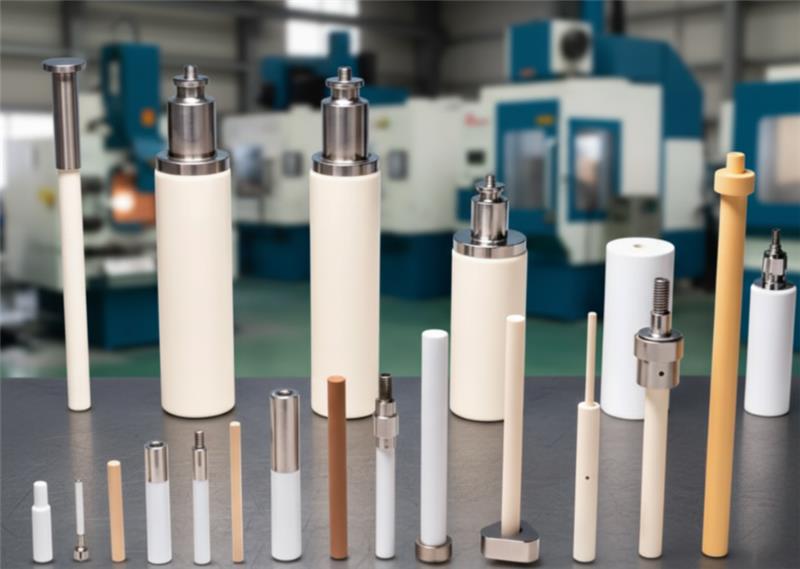
From automotive parts to pump assemblies, Alumina finds widespread use in manufacturing due to its wear resistance and dimensional accuracy.
- Bearings, guides, and wear plates extend equipment lifespan.
- Nozzles and orifices maintain precision in high-speed operations.
- Cutting and grinding tools enhance productivity through prolonged durability.
These industrial ceramics components are designed to minimize wear, reduce downtime, and ensure optimal performance in continuous operations.
Advantages of Using Alumina in Industrial Ceramics
Alumina offers a unique balance of performance and practicality, making it one of the most cost-effective solutions in industrial ceramics manufacturing.
Key Benefits Include:
- Extended Service Life: Exceptional wear and corrosion resistance ensure long operational periods.
- Low Maintenance: Components maintain functionality with minimal servicing.
- Enhanced Efficiency: Superior heat and electrical insulation improve energy utilization.
- Design Flexibility: Can be customized for complex geometries and applications.
- Sustainability: Environmentally stable, non-toxic, and recyclable material.
Integrating advanced Alumina ceramics into design not only enhances product performance but also contributes to greater sustainability and cost-effectiveness across industrial ecosystems.
Conclusion
Alumina is the backbone of industrial ceramics—a material that combines mechanical excellence with thermal and chemical reliability. Its applications across aerospace, electronics, medical, and energy sectors reflect its unmatched adaptability and long-term performance benefits.
Innovation and precision define every Alumina solution. Backed by decades of experience, CeramForge engineers fine-tuned Alumina grades that empower industries to push beyond conventional limits—ensuring superior durability, efficiency, and return on investment. For industries seeking the best use of Alumina, We deliver materials that truly stand the test of time.