Table of Contents
Overview of Types of Plungers
In high-pressure industrial systems, plungers play a vital role in ensuring the accurate transfer of fluids, chemicals, and slurries. These small yet powerful components are the heart of dosing, metering, and pumping systems found across industries such as oil & gas, pharmaceuticals, water treatment, and coatings. Understanding the different types of plungershelps industries choose the right design and material to achieve reliability, longevity, and efficiency in demanding conditions.
At CeramForge, a trusted name in industrial ceramic industries, the focus is on delivering high-performance ceramic plungers designed to withstand abrasive, corrosive, and high-pressure environments. Using advanced materials like Zirconia, Alumina, and Zirconia Toughened Alumina (ZTA), We redefine how plungers perform under industrial stress.
We manufacture ceramic plungers using advanced materials engineered for high strength, corrosion resistance, and thermal stability. Each material type serves distinct industrial needs.
Zirconia (Y-TZP / MgO-PSZ)
- Exceptional fracture toughness and flexural strength.
- High thermal stability and wear resistance.
- Suitable for chemical injection and metering systems.
Zirconia Toughened Alumina (ZTA)
- Combines alumina’s hardness with zirconia’s toughness.
- Ideal for high-pressure sealing and slurry dosing applications.
Alumina (Al₂O₃)
- Known for hardness and dimensional precision.
- Resistant to acids, alkalis, and temperature fluctuations.
Each ceramic plunger undergoes isostatic pressing and precision grinding, ensuring tight tolerances and smooth finishes crucial for leak-free sealing and consistent flow. These ceramic plungers are engineered with isostatic pressing, sintering, and precision grinding to achieve mirror finishes and micron-level tolerances, ensuring flawless performance across a wide range of plunger types and applications.
Different Types of Plungers
There are several types of plungers, each designed for specific functions and operating environments. The choice of plunger depends on factors such as pressure, fluid type, temperature, and required precision. Below are the most widely used categories in industrial applications.
Ceramic Plungers
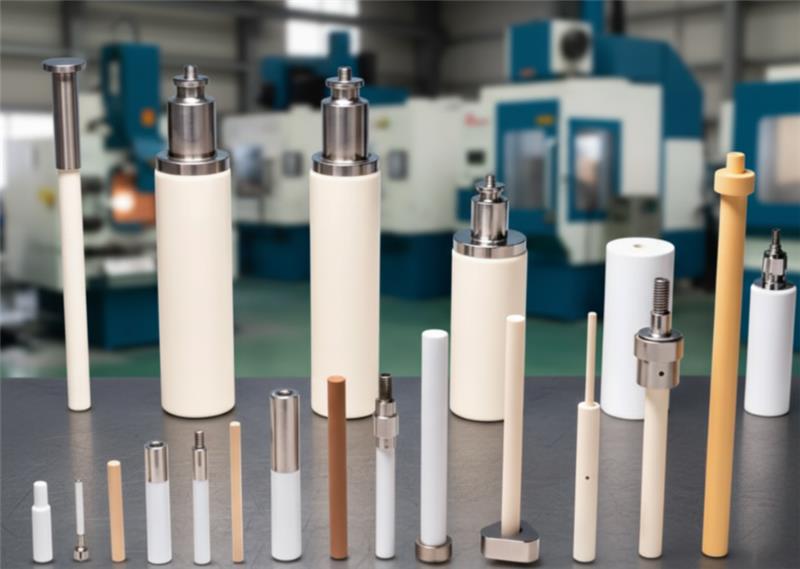
Ceramic plungers are at the forefront of modern industrial applications where traditional metallic plungers fail. These are manufactured using advanced ceramics such as Zirconia (Y-TZP, MgO-PSZ), Zirconia Toughened Alumina (ZTA), and Alumina (Al₂O₃).
Properties of Ceramic Plungers
- Exceptional hardness and smoothness for prolonged durability.
- Resistance to thermal shock and dimensional distortion.
- Superior sealing ability due to ultra-low surface roughness.
Applications of Ceramic Plungers
- High-pressure cleaning systems.
- Pharmaceutical dosing pumps.
- Slurry handling and injection systems.
- Chemical metering and desalination plants.
Benefits of Ceramic Plungers
- No corrosion or pitting even in harsh environments.
- Extended service life with minimal maintenance.
- Enhanced pumping accuracy due to precise dimensional stability.
Ceramic plungers are tailored for high-pressure performance, ensuring that every component meets exact operational standards.
Steel Plungers
Steel plungers were once the industry standard due to their strength and easy manufacturability. However, they are prone to corrosion and wear when used with abrasive or chemically reactive fluids.
Applications:
- Hydraulic and lubrication systems.
- Oil refineries and water pumps.
- Industrial machinery requires moderate pressure.
Limitations:
- Susceptible to oxidation and galling.
- Require regular lubrication and maintenance.
While cost-effective initially, steel plungers incur higher lifecycle costs due to frequent replacements — an issue ceramic plunger from CeramForge efficiently overcome.
Tungsten Carbide Plungers
Tungsten carbide plungers provide high strength and moderate wear resistance, used in systems with heavy mechanical loads. However, they lack the chemical resistance and dimensional stability of ceramics.
Applications:
- Industrial compressors.
- Drilling and mining machinery.
- High-load hydraulic systems.
Limitations:
- Brittle under extreme pressure fluctuations.
- Prone to corrosion in chemically active fluids.
Ceramic plungers, by contrast, offer superior adaptability in both mechanical and chemical environments — making them ideal for industrial ceramic industries.
Coated Plungers
Coated plungers are metallic plungers coated with hard layers such as chromium or ceramic films to improve surface durability.
Applications:
- Pumps handling mildly abrasive slurries.
- Systems need temporary corrosion protection.
Limitations:
- Coatings can peel off under prolonged use.
- Performance depends on coating thickness and adhesion quality.
Our fully ceramic plungers outperform coated alternatives by offering monolithic integrity — where the entire structure provides resistance, not just the surface.
Composite Plungers
Composite plungers combine metal and ceramic components for balanced performance. These are used when moderate chemical resistance and cost efficiency are required.
Applications:
- Paints, inks, and coating industries.
- General-purpose chemical injection pumps.
Limitations:
- Limited lifespan under high pressure.
- Not ideal for extremely corrosive environments.
Ceramic plungers offer better long-term performance due to their uniform composition and structural integrity.
Different Types of Plungers Across Industries
The different types of plungers, particularly ceramic plungers, are integral to several sectors that depend on reliability under pressure.
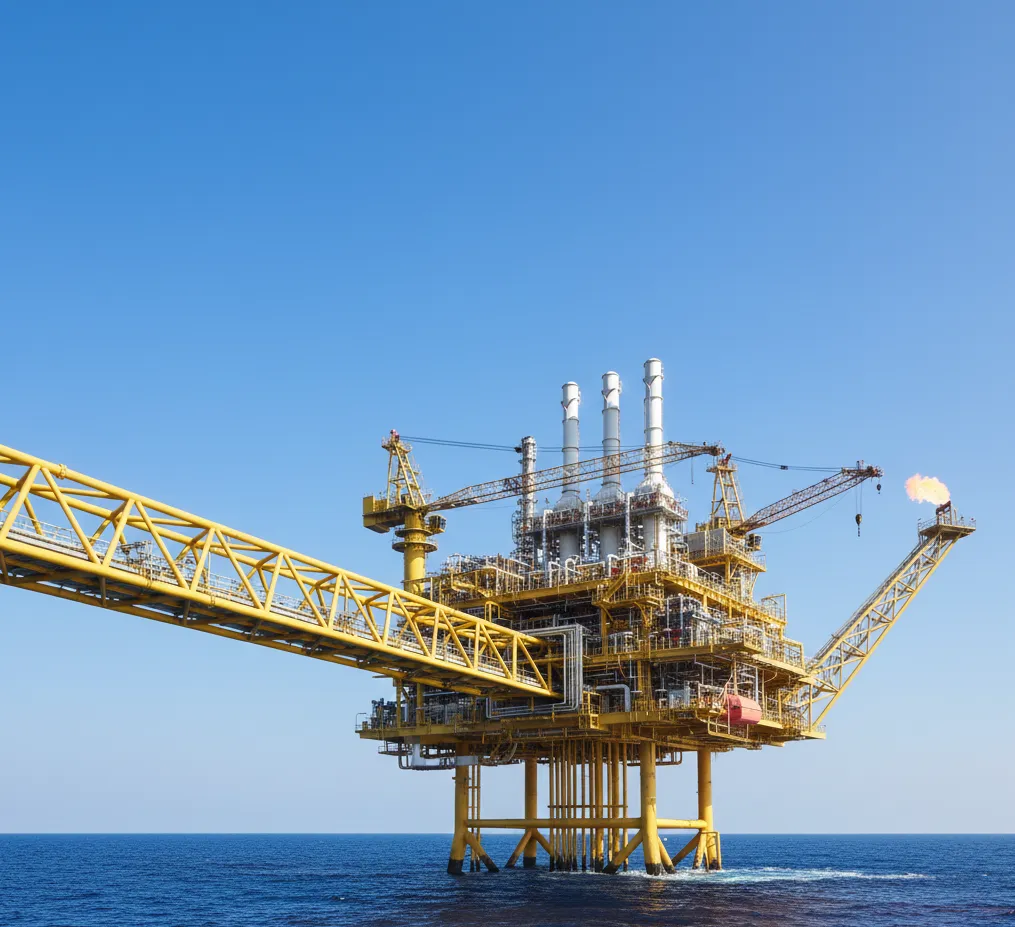
- Oil & Gas: Chemical injection and metering pumps for drilling operations.
- Water Treatment & Desalination: High-pressure feed pumps resistant to corrosion.
- Mining & Slurry Dosing: Handles abrasive particle-laden fluids effectively.
- Pharmaceutical & Biotech: Enables precise dosing with zero contamination risk.
- Paints, Inks & Coatings: Ensures smooth and consistent fluid transfer.
By delivering long-lasting, corrosion-free performance, ceramic plungers minimize maintenance downtime and improve production efficiency that goes beyond material superiority and reflects engineering expertise and manufacturing precision.
Conclusion
In industries where high-pressure performance and durability are non-negotiable, understanding the different types of plungers becomes critical. While steel and coated plungers serve general applications, ceramic plungers have revolutionized reliability in industrial ceramic industries.
At CeramForge, each ceramic plunger is a result of advanced material science and precision craftsmanship — designed to deliver superior wear resistance, dimensional accuracy, and extended service life. For any application that demands long-lasting reliability under pressure, we provide the plunger solution engineered to perform.