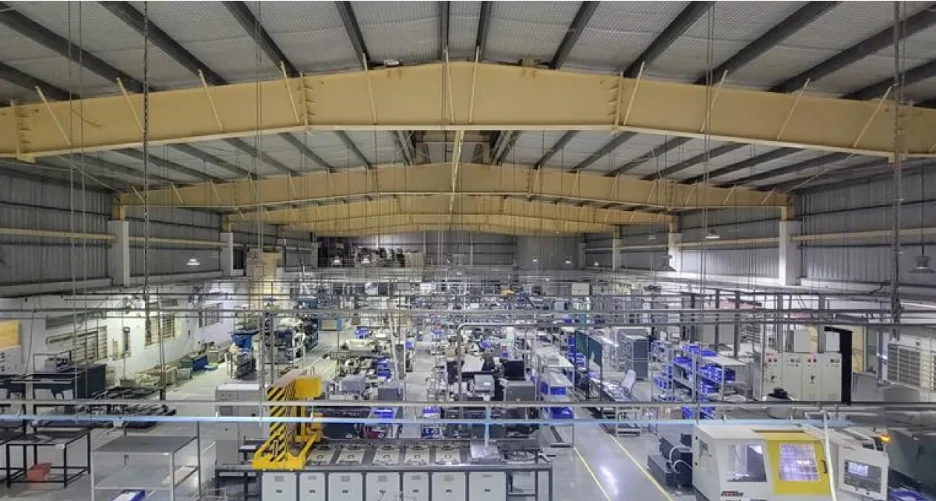
Quality Control in Industrial Ceramics Production has become a defining benchmark for performance, safety, and reliability across modern industrial applications. As ceramics are increasingly used in oil & gas, power generation, aerospace, chemicals, and advanced manufacturing, the margin for error has narrowed significantly. Any deviation in material consistency, dimensional accuracy, or surface integrity can directly impact system uptime and operational cost.
For the ceramic industry, quality control is no longer a final inspection activity—it is an integrated, end-to-end discipline that governs every stage of production. A trusted industrial ceramic manufacturer like CeramForge embeds quality control into material selection, processing, inspection, and validation to ensure components perform reliably in extreme operating environments.
Table of Contents
Quality Control in Industrial Ceramics Production Begins with Raw Material Integrity
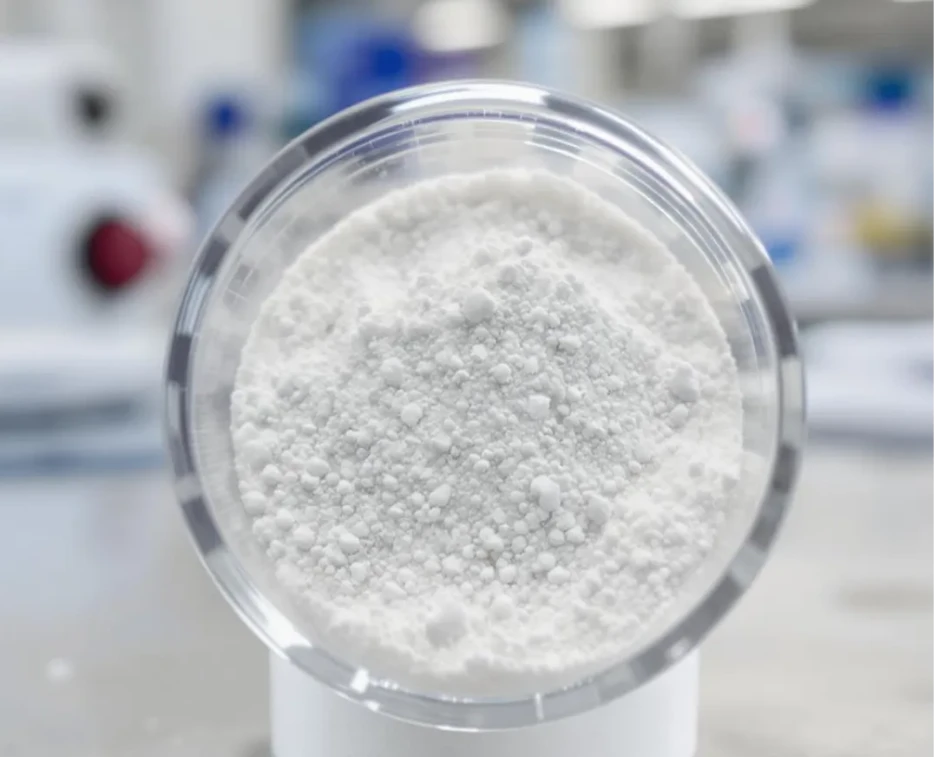
A robust Quality Control in Industrial Ceramics Production framework starts with strict raw material evaluation. The ceramic industry depends heavily on material purity, particle size distribution, and chemical consistency, as even minor variations can affect sintering behaviour and final performance.
Industrial ceramic manufacturers assess incoming raw materials for moisture content, contamination, and batch uniformity before they enter the production flow. This early-stage quality control ensures predictable forming, densification, and mechanical strength in finished components.
For CeramForge, raw material quality control supports consistent performance across production batches, enabling reliable supply to industries that demand repeatability. By controlling material integrity at the source, the ceramic industry reduces downstream defects and rework.
Quality Control in Industrial Ceramics Production During Forming and Processing
The effectiveness of Quality Control in Industrial Ceramics Production becomes increasingly critical during forming and processing stages. Processes such as isostatic pressing, shaping, and green machining directly influence density, structural uniformity, and load-bearing capability.
Industrial ceramic manufacturers monitor forming pressures, tooling conditions, and dimensional consistency to prevent internal voids or stress concentrations. These controls help ensure that ceramic components maintain structural stability under thermal and mechanical loads.
CeramForge applies process-level quality control to achieve high dimensional repeatability and surface consistency. This disciplined approach allows the ceramic industry to meet demanding specifications without compromising production efficiency.
Quality Control in Industrial Ceramics Production Through Thermal Processing
Thermal processing represents a decisive phase in Quality Control in Industrial Ceramics Production. Sintering transforms shaped ceramic components into dense, high-strength materials capable of withstanding industrial operating conditions.
Precise temperature control, controlled heating cycles, and atmosphere management are essential to avoid warping, microcracking, or inconsistent grain growth. Industrial ceramic manufacturers rely on controlled sintering protocols to achieve stable mechanical and thermal properties.
CeramForge integrates thermal process monitoring into its quality control framework to ensure uniform densification and predictable performance. This level of control strengthens the ceramic industry’s ability to deliver components suitable for high-temperature, corrosive, and high-pressure environments.
Quality Control in Industrial Ceramics Production Through Inspection and Validation
Inspection and validation are central pillars of Quality Control in Industrial Ceramics Production. Finished components must undergo rigorous checks to confirm compliance with dimensional, mechanical, and surface finish requirements.
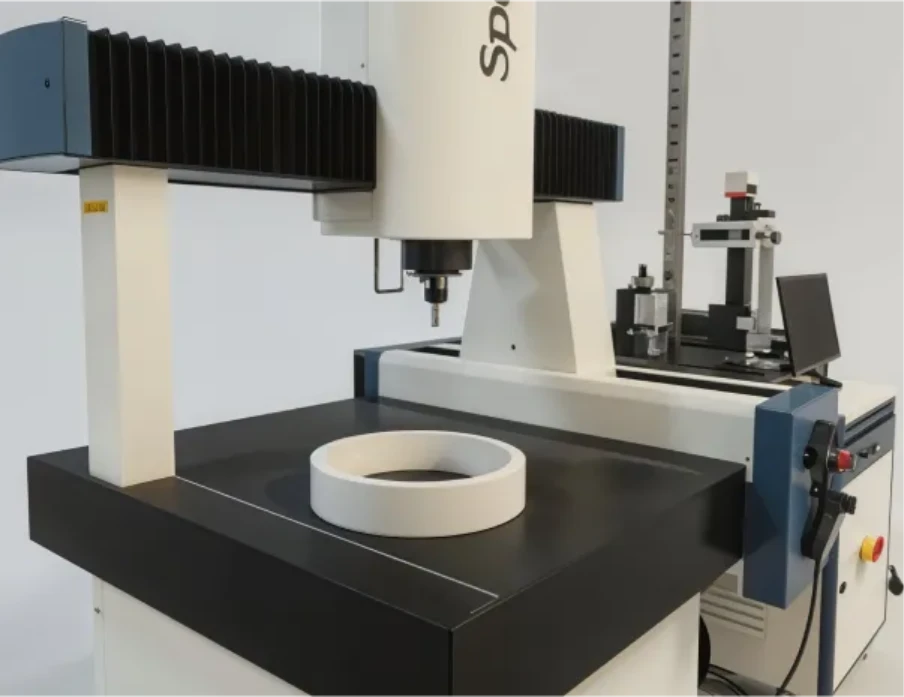
Industrial ceramic manufacturers deploy advanced inspection systems such as dimensional measurement, surface roughness testing, density analysis, and microstructural examination. These validations ensure that every ceramic component meets application-specific performance expectations.
CeramForge follows a multi-layered inspection approach that aligns with the evolving demands of the ceramic industry. By validating each component before deployment, quality control reduces failure risks and enhances long-term reliability for end users.
Quality Control in Industrial Ceramics Production as a Competitive Advantage
In today’s market, Quality Control in Industrial Ceramics Production is not just a technical necessity—it is a competitive differentiator. Industries increasingly prefer ceramic suppliers who demonstrate traceability, process transparency, and consistent quality outcomes.
A reliable industrial ceramic manufacturer builds trust by maintaining documented quality systems and delivering components that perform consistently across operating cycles. This trust directly influences long-term partnerships and repeat business.
CeramForge positions quality control as a strategic strength, supporting customers across the ceramic industry with components engineered for durability, safety, and lifecycle value. Through disciplined quality practices, CeramForge enables customers to reduce downtime, extend service intervals, and improve system performance.
Conclusion: Quality Control in Industrial Ceramics Production
Quality Control in Industrial Ceramics Production defines the success of modern ceramic applications across demanding industries. From raw material evaluation to final inspection, quality control governs reliability, safety, and performance consistency.
As the ceramic industry continues to evolve, manufacturers with integrated quality systems stand apart. Selecting an experienced industrial ceramic manufacturer ensures that ceramic components meet both operational and commercial expectations.
CeramForge remains committed to delivering ceramic solutions backed by rigorous quality control, supporting industries that demand precision, durability, and long-term reliability.